
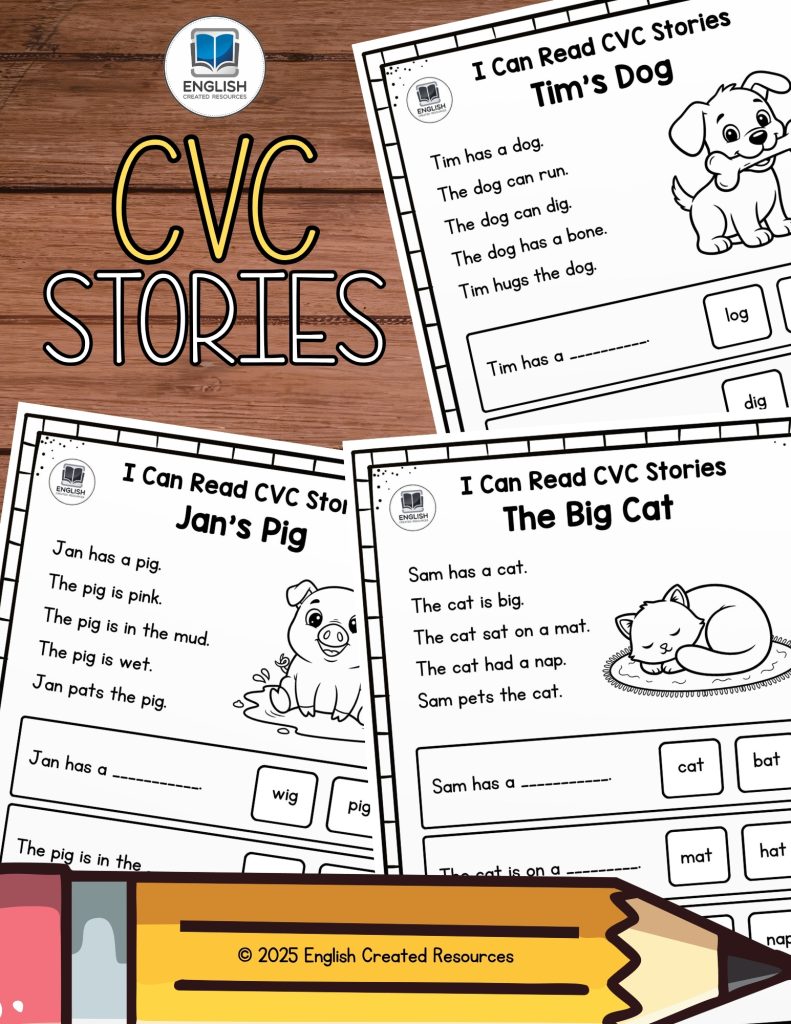
CVC Stories
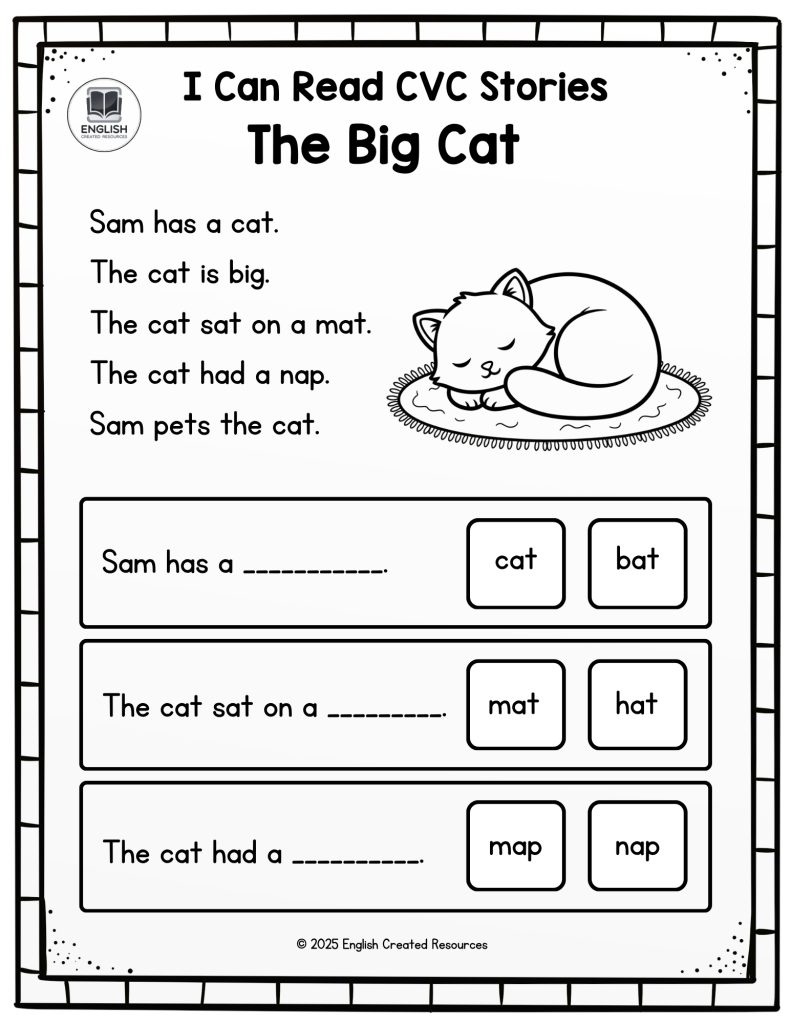
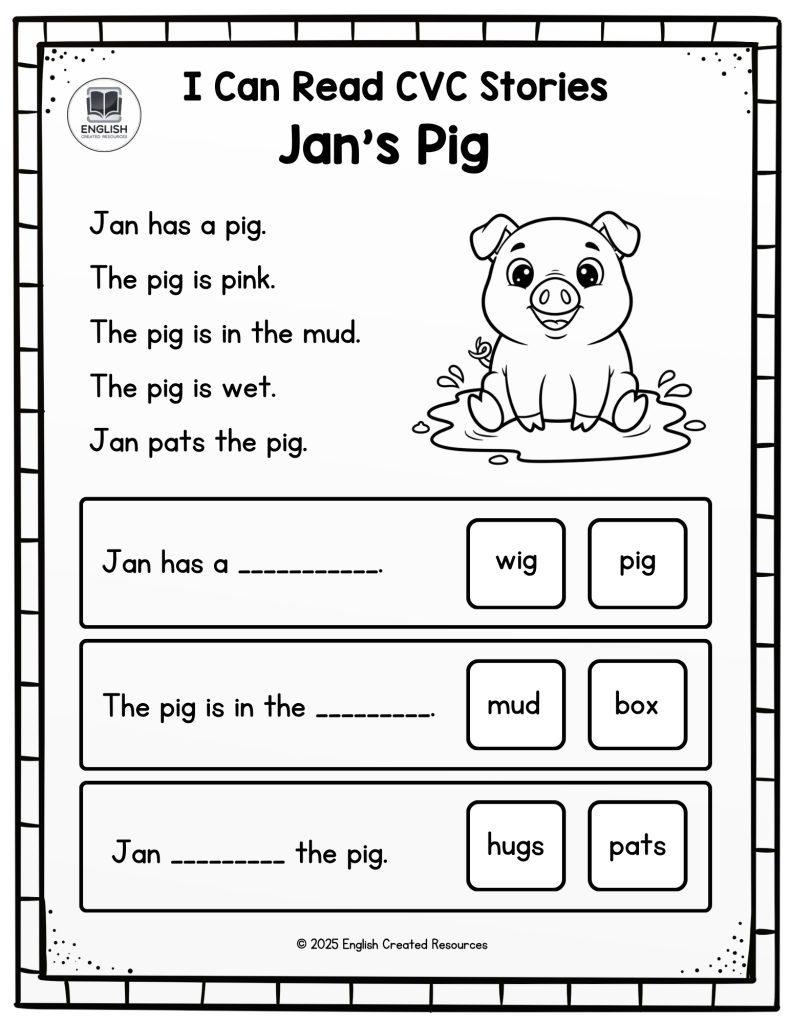
CVC stories play a very important role in helping preschool children begin their reading journey with confidence, excitement, and understanding. At the preschool stage, children are still developing basic language skills, learning how sounds work together, and discovering that letters have meaning. CVC stories provide a simple and effective way to introduce early reading because they are built around consonant-vowel-consonant words such as cat, dog, sun, pig, map, and bed. These short and simple words are easier for young children to decode, pronounce, and remember. When children repeatedly see and hear these patterns inside meaningful stories, they begin to understand how reading works naturally and comfortably.
Preschool children learn best through repetition, rhythm, pictures, and enjoyable experiences. CVC stories combine all these important elements in one activity. The simple sentence structures and predictable vocabulary help children focus on blending sounds rather than becoming overwhelmed by difficult words. This supports early phonics development because children practice connecting letter sounds together to form real words. Instead of memorizing random vocabulary, children start understanding the relationship between letters and sounds in a meaningful context. This understanding becomes the foundation for future reading success.
One of the greatest benefits of CVC stories is that they build confidence in young learners. Many preschool children feel proud and excited when they can read words independently for the first time. Reading a complete story, even a simple one, gives children a sense of achievement. This feeling encourages them to continue practicing and exploring books. Confidence is extremely important during early childhood because positive learning experiences shape children’s attitudes toward school and reading for many years. A child who feels successful while reading simple CVC stories is more likely to develop a lifelong love for books and learning.
CVC stories also improve listening skills and concentration. Preschool children must pay attention carefully to sounds, words, and pictures while following the storyline. This helps strengthen focus and memory. As children listen to or read short stories, they begin understanding sequencing, cause and effect, and story structure. They learn that stories have characters, settings, actions, and endings. These early comprehension skills are essential for future academic success because reading is not only about saying words correctly but also about understanding meaning.
Another important advantage of CVC stories is vocabulary development. Even though the words are simple, children are exposed to new objects, actions, emotions, and situations. Through repeated reading, children begin using these new words during speaking and conversations. Stories help children understand language naturally because vocabulary appears in meaningful sentences instead of isolated drills. This improves both expressive language and communication skills. Preschool children often repeat phrases from stories during playtime, which strengthens language retention and creativity.

CVC stories are also excellent tools for developing phonemic awareness. Preschool children learn how to hear beginning sounds, middle vowel sounds, and ending sounds in words. They begin noticing patterns between words like cat, hat, mat, and bat. This sound awareness is one of the strongest predictors of future reading ability. Through CVC stories, children learn that changing one letter can create a completely different word. This playful exploration of sounds helps children become flexible and confident readers.
Illustrations inside CVC stories are equally valuable. Young children rely heavily on visual support while learning. Colorful and meaningful pictures help children connect words to real-life objects and actions. Images provide context clues that strengthen comprehension and make reading more enjoyable. Preschool children often use illustrations to predict what will happen next in the story, which improves thinking and reasoning skills. Pictures also keep children engaged for longer periods and encourage active participation during reading time.
CVC stories support emotional and social development as well. Many preschool stories include themes about friendship, kindness, sharing, family, feelings, and everyday experiences. Children relate to these situations and learn valuable life lessons through simple language they can understand. Stories help children recognize emotions and develop empathy. When teachers or parents discuss characters and events, children learn how to express thoughts and feelings more clearly.
These stories are also highly effective for encouraging independent learning. Since CVC texts are easier to decode, children gradually become less dependent on adults for reading support. This independence increases motivation and self-esteem. Preschool children enjoy feeling capable and responsible, and independently reading even a short story can become a powerful learning milestone. Independent reading practice also strengthens fluency, which helps children read more smoothly and naturally over time.
CVC stories are especially helpful for preschool children with different learning styles. Visual learners benefit from pictures, auditory learners benefit from hearing sounds and rhymes, and kinesthetic learners can engage with story-based activities such as acting out scenes, matching pictures, or tracing words. Because CVC stories are flexible and interactive, teachers and parents can adapt them easily to meet the needs of different learners. This inclusive nature makes them valuable tools in preschool classrooms and home learning environments.
Another reason CVC stories are important is that they encourage parent-child interaction. Reading together creates special bonding moments between children and caregivers. Shared reading experiences help children feel safe, supported, and emotionally connected. When parents read CVC stories aloud, ask questions, point to words, and celebrate successes, children develop stronger literacy skills and positive emotional associations with books. These early reading habits often continue throughout childhood.
CVC stories also prepare preschool children for kindergarten and primary school expectations. Early exposure to simple reading materials gives children a stronger academic foundation before formal education begins. Children who practice blending sounds and reading simple sentences often transition more smoothly into structured literacy instruction. They become more comfortable participating in classroom reading activities and demonstrate stronger readiness skills.
Creativity and imagination are also encouraged through CVC stories. Even simple stories allow children to imagine characters, settings, and events. After reading, preschoolers often enjoy drawing scenes, retelling stories, changing endings, or creating their own simple CVC sentences. These creative activities strengthen thinking skills, language development, and self-expression. Storytelling also improves oral language confidence because children learn to communicate ideas clearly.
CVC stories can reduce frustration during early reading instruction. Long or difficult texts may overwhelm preschool children and make them lose interest quickly. Simple and decodable stories provide appropriate challenges without causing unnecessary stress. Children experience success more frequently, which keeps motivation high. Positive early experiences with reading are extremely important because they influence future attitudes toward literacy and learning in general.
Teachers benefit greatly from using CVC stories in preschool classrooms because these stories support multiple learning goals at the same time. A single story can reinforce phonics, vocabulary, comprehension, speaking, listening, memory, and creativity. Stories can be used during group lessons, independent practice, centers, homework, or assessment activities. Their versatility makes them practical and highly effective educational resources.
Repeated reading of CVC stories is another valuable practice. Preschool children enjoy hearing the same stories again and again. Repetition helps improve word recognition, fluency, pronunciation, and confidence. Every rereading strengthens neural connections in the brain related to language and literacy. Familiar stories also help children notice details they may have missed earlier, which deepens comprehension and understanding.
CVC stories can also support children who are learning English as a second language. The simple vocabulary and repetitive sentence patterns make language easier to understand and practice. Young learners can focus on pronunciation, vocabulary, and sentence structure without becoming confused by complex grammar. Pictures and predictable text further support comprehension and participation.
The use of rhythm, rhyme, and repetition in many CVC stories helps develop early literacy in an enjoyable way. Preschool children naturally enjoy songs, chants, and repetitive language. These features improve memory and make learning feel playful instead of difficult. Fun reading experiences increase engagement and help children associate reading with happiness and success.
Technology and printable educational resources have made CVC stories even more accessible for teachers and parents. Interactive books, worksheets, story sequencing cards, coloring pages, and phonics games can all be connected to simple stories. This variety keeps children interested and allows learning to continue in many different ways. Whether used in classrooms, homeschooling, or tutoring sessions, CVC stories remain powerful tools for early childhood education.
Most importantly, CVC stories help preschool children discover that reading is meaningful and enjoyable. They move children beyond simply identifying letters and sounds into understanding that words can tell stories, share ideas, and create imagination. This realization is one of the most important milestones in early literacy development. When children begin enjoying books and believing in their ability to read, they build a strong foundation for lifelong learning, communication, and academic growth.
Samples from the Stories